Part 1
From floppy disks to the tile table
In my late twenties, I helped bring brain-training games to the early web. Here is what that taught me about memory, speed, and the need for people.
Deborah Najm · October 17, 2026 · 5 min read
Most of my students know me as the person who taught them to tell a Crak from a Dot. Fewer know that back in the late 1990s, in my late twenties, my job was all about the brain.
Brain.com and the early web
I was Director of IT at Brain.com, a company founded by Josh Reynolds. If the name sounds familiar, it may be because he also brought the world the Mood Ring and the ThighMaster. Josh had a gift for taking an idea people were curious about and putting it in their hands. At Brain.com, that idea was the mind itself.
When I arrived, the company's cognitive games lived on 3.5-inch floppy disks. You bought them, slid them into a drive, and played at your desk, and even then players found each other in our forums to compare notes. My job was to lead the engineering work of moving those games onto the early web, rebuilding them as Java servlets so anyone with a browser could play. It was a new frontier, and we were figuring much of it out as we went.
A million people took the test
We built a 5-minute IQ test to introduce people to thinkFAST. It went viral in the way things could go viral back then, passed along by email and word of mouth, and more than a million people took it. Brain.com became a popular destination on the early web.
thinkFAST was a suite of ten brain-training exercises, and every response was timed to the millisecond. The technical term is cognitive chronometrics, which is a formal way of saying that how quickly you answer tells you a great deal about how your mind is working. By the time the dot-com bust hit, Brain.com was logging roughly 450,000 visits a month, with players tracking their scores and working toward becoming BrainMasters.
The technology behind thinkFAST was patented, with Josh Reynolds as lead inventor (U.S. Patent 5,911,581, Interactive computer program for measuring and analyzing mental ability). I was one of just eight employees when that patent was granted.
We knew connection mattered
From the floppy-disk days on, we knew a mind isn't meant to train alone. Our forums were full of players comparing notes and cheering each other on, and BrainMasters earned access to a members-only forum of their own. It was a real community, but every conversation in it happened on a screen.
After the bust, Brain.com became Cognitive Care and took those assessments into doctors' offices, where versions of them are still used today. The work held up. What stayed with me was the community.
thinkFAST measured these skills. Mahjong exercises them, with friends, over good conversation.
Decades later, when I started teaching mahjong, I recognized the skills right away. Holding several tiles and possibilities in mind at once. Planning a few turns ahead. Letting go of a plan when the Charleston hands you something unexpected. Keeping pace with the table. These are the same abilities thinkFAST was built to measure. The difference is that mahjong asks for them face to face, across a table from three other people. It offers what no forum could.
What the research suggests
That difference matters, and the research is starting to show why. In a nine-month trial in Hong Kong nursing homes, older adults with mild dementia who played mahjong held their cognitive scores steady while a group doing simple crafts declined. A national study in China that followed older adults for up to ten years found that those who played cards or mahjong had a lower risk of dementia. And a University of Georgia study of nearly 11,000 adults linked regular mahjong with fewer symptoms of depression, though only where the game stayed friendly rather than competitive.
To be clear, this research is still early. Most of it comes from Chinese mahjong and older adults, and the largest studies show links rather than proof. No game is a cure, and nobody has shown that mahjong prevents Alzheimer's disease. But the pattern is consistent: a busy mind and a full calendar of people are good for the brain, and mahjong offers both at once.
Why I teach the way I do
This is why Starlit Society tables are built the way they are. Beginners are welcome. Questions are encouraged. The conversation matters as much as the hand. In my twenties, I helped build tools that measured minds one person at a time. Decades later, I get to watch minds at work together, every week, around a table for four.
If you have taken a class but have not found people to play with, or if you have simply been curious, come to Open Play. Come on your own, and we will find you a seat.
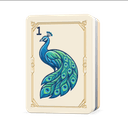
From the teaching table at Starlit, part of the Mahjong and the Mind series. Next: Mahjong and your brain: what the research really says.
Sources
- U.S. Patent 5,911,581, Interactive computer program for measuring and analyzing mental ability, 1999Inventors Josh Reynolds and Jeremy Knight. Covers a computer program that presents visual and sound cues, times responses, adjusts difficulty, and tracks reaction time, attention, and processing scores over time.
- Cheng et al., American Journal of Geriatric Psychiatry, 2014Cluster-randomized trial in nursing homes. Mahjong players held steady on overall cognition, delayed recall of a word list, and forward digit span while a handicraft group declined, ending 4.5 MMSE points higher at nine months.
- Chinese Longitudinal Healthy Longevity Survey analysis, 2022Older adults followed for up to ten years. Playing cards or mahjong was associated with a lower risk of dementia.
- Chen et al., University of Georgia, Social Science & Medicine, 2019Nearly 11,000 adults 45 and older. Regular mahjong was linked to fewer depressive symptoms for city residents, with no link where play tended to be competitive.
This page shares general information about research on leisure activities and brain health. It is not medical advice. If you have concerns about memory or thinking, please talk with your doctor.