Part 4
Why the table matters as much as the tiles
Social connection, brain health, and how Open Play is designed around both.
Deborah Najm · November 10, 2026 · 4 min read
So far in this series, we've looked at what happens inside your head during a game: the memory, the planning, the speed. This time I want to look across the table, because the research suggests the people sitting there matter just as much.
Isolation is a risk factor you can change
In 2024, the Lancet Commission, an international panel of leading dementia researchers, updated its list of 14 risk factors for dementia that people can actually change. Social isolation in later life is on that list, alongside things like hearing loss and physical inactivity.
A risk factor isn't a cause, and changing one isn't a guarantee. But it's a meaningful signal. Spending regular time with other people belongs in the same conversation as staying active and getting your hearing checked.
The detail that stayed with me
That's why one finding from the University of Georgia mahjong study stayed with me. In Part 2, I shared that researchers followed nearly 11,000 adults 45 and older in China, and that regular mahjong was linked to fewer symptoms of depression among people living in cities.
But in rural areas, where the researchers noted the game often turns competitive and sometimes into gambling, the benefit disappeared. Same tiles, same rules. A different kind of table.
It isn't only the tiles. It's the kind of table you sit down at.
The study can't tell us exactly why, and it's one study, so I hold it loosely. But it matches what I see every week. A table where people feel welcome, laugh, and help each other is a very different experience from one where every hand feels like a test.
What a screen couldn't give us
Even at Brain.com, we knew connection mattered. Our forums were full of players comparing notes, and BrainMasters earned a members-only forum of their own. It was a real community, but it lived on a screen.
thinkFAST could measure how quickly you answered. It couldn't pass you a tile, notice you were having a hard day, or ask how your week went. Mahjong does all of that while it exercises the skills we talked about in Part 3.
How Open Play is designed
What I've tried to build with Starlit Society is a table where beginners are welcome, questions are encouraged, and the conversation matters as much as the hand. Open Play is set up around that idea.
- Come on your own. You don't need a group or a regular foursome. Just come and we'll find you a seat.
- Questions are part of the game. Asking which hand to play or whether you can call a tile isn't slowing anyone down. It's how everyone at the table keeps learning.
- A regular rhythm. Tuesdays at 6:00 PM and Thursdays at 11:30 AM and 6:00 PM. Part 2's research suggested twice a week worked about as well as four times, so a steady habit counts for more than marathon sessions.
- Easy to start. Open Play is included with a Society membership, or you can drop in for $20.
As always, a word of honesty. No one has shown that mahjong prevents Alzheimer's disease or dementia. What the research does support is that a mind kept busy, in good company, on a regular schedule is a brain-healthy habit. Open Play gives you all three.
Next week, in the final part of this series, I'll walk you through what to expect at your first class or Open Play, and why learning something new is the whole point.
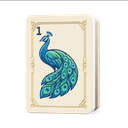
From the teaching table at Starlit, part of the Mahjong and the Mind series. Next: Your brain at the table: a beginner's guide.
Sources
- Livingston et al., Lancet Commission on Dementia, 2024Social isolation in later life is one of 14 modifiable risk factors for dementia.
- Chen et al., University of Georgia, Social Science & Medicine, 2019Nearly 11,000 adults 45 and older. Regular mahjong was linked to fewer depressive symptoms for city residents, with no link where play tended to be competitive.
This page shares general information about research on leisure activities and brain health. It is not medical advice. If you have concerns about memory or thinking, please talk with your doctor.